
OpenCTI: NOTES
On this page
- What is OpenCTI and how is it used?
- How would I navigate through the platform?
- What functionalities will be important during a security threat analysis?
Cyber Threat Intelligence is typically a managerial mystery to handle, with organisations battling with how to input, digest, analyse and present threat data in a way that will make sense. From the rooms that have been linked on the overview, it is clear that there are numerous platforms that have been developed to tackle the juggernaut that is Threat Intelligence.
OpenCTI#
OpenCTI is another open-sourced platform designed to provide organisations with the means to manage CTI through the storage, analysis, visualisation and presentation of threat campaigns, malware and IOCs.
Objective#
Developed by the collaboration of the French National cybersecurity agency (ANSSI), the platform’s main objective is to create a comprehensive tool that allows users to capitalise on technical and non-technical information while developing relationships between each piece of information and its primary source. The platform can use the MITRE ATT&CK framework to structure the data. Additionally, it can be integrated with other threat intel tools such as MISP and TheHive. Rooms to these tools have been linked in the overview.
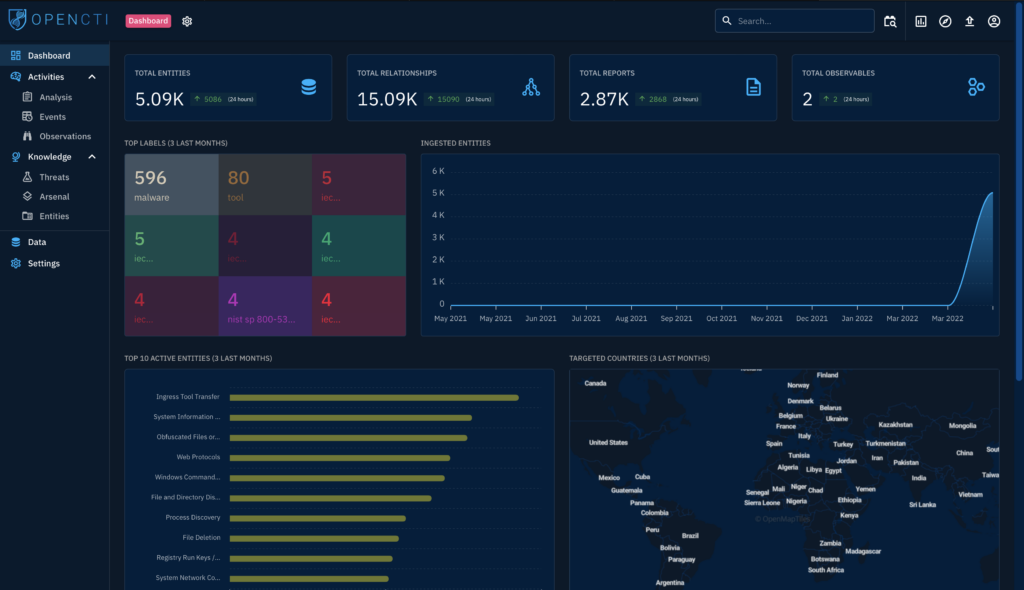
OpenCTI Data Model#
OpenCTI uses a variety of knowledge schemas in structuring data, the main one being the Structured Threat Information Expression (STIX2) standards. STIX is a serialised and standardised language format used in threat intelligence exchange. It allows for the data to be implemented as entities and relationships, effectively tracing the origin of the provided information.
This data model is supported by how the platform’s architecture has been laid out. The image below gives an architectural structure for your know-how.
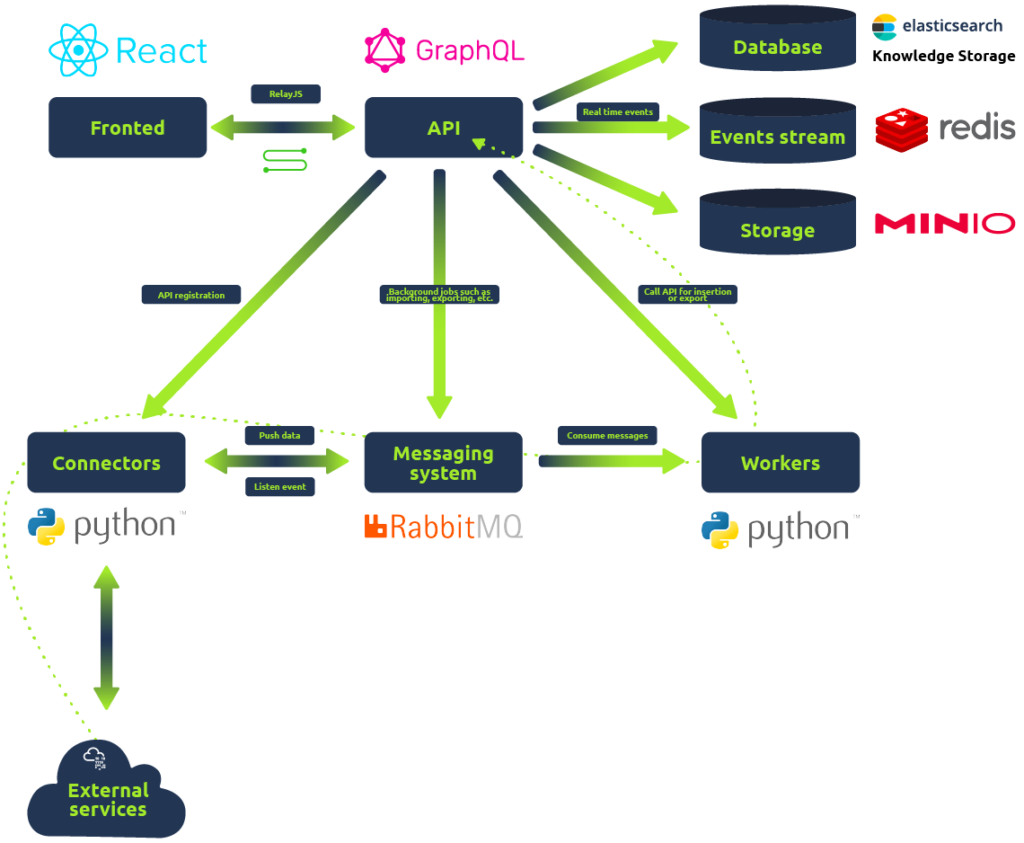
Source:
The highlight services include:
- GraphQL API: The API connects clients to the database and the messaging system.
- Write workers: Python processes utilised to write queries asynchronously from the RabbitMQ messaging system.
- Connectors: Another set of Python processes used to ingest, enrich or export data on the platform. These connectors provide the application with a robust network of integrated systems and frameworks to create threat intelligence relations and allow users to improve their defence tactics.
According to OpenCTI, connectors fall under the following classes:
Class
Description
Examples
External Input Connector
Ingests information from external sources
CVE, MISP, TheHive, MITRE
Stream Connector
Consumes platform data stream
History, Tanium
Internal Enrichment Connector
Takes in new OpenCTI entities from user requests
Observables enrichment
Internal Import File Connector
Extracts information from uploaded reports
PDFs, STIX2 Import
Internal Export File Connector
Exports information from OpenCTI into different file formats
CSV, STIX2 export, PDF
Refer to the connectors and data model documentation for more details on configuring connectors and the data schema.

Keep reading
 /Cybersecurity
Boogeyman 3:WALKTHROUGH
Due to the previous attacks of Boogeyman, Quick Logistics LLC hired a managed security service provider to handle its Security Operations Center. Little did they know, the Boogeyman was still…
 /Cybersecurity
Boogeyman 2:WALKTHROUGH
After having a severe attack from the Boogeyman, Quick Logistics LLC improved its security defences. However, the Boogeyman returns with new and improved tactics, techniques and procedures. In this…
 /Cybersecurity
Boogeyman 1: WALKTHROUGH
Uncover the secrets of the new emerging threat, the Boogeyman. In this room, you will be tasked to analyse the Tactics, Techniques, and Procedures (TTPs) executed by a threat group, from obtaining…